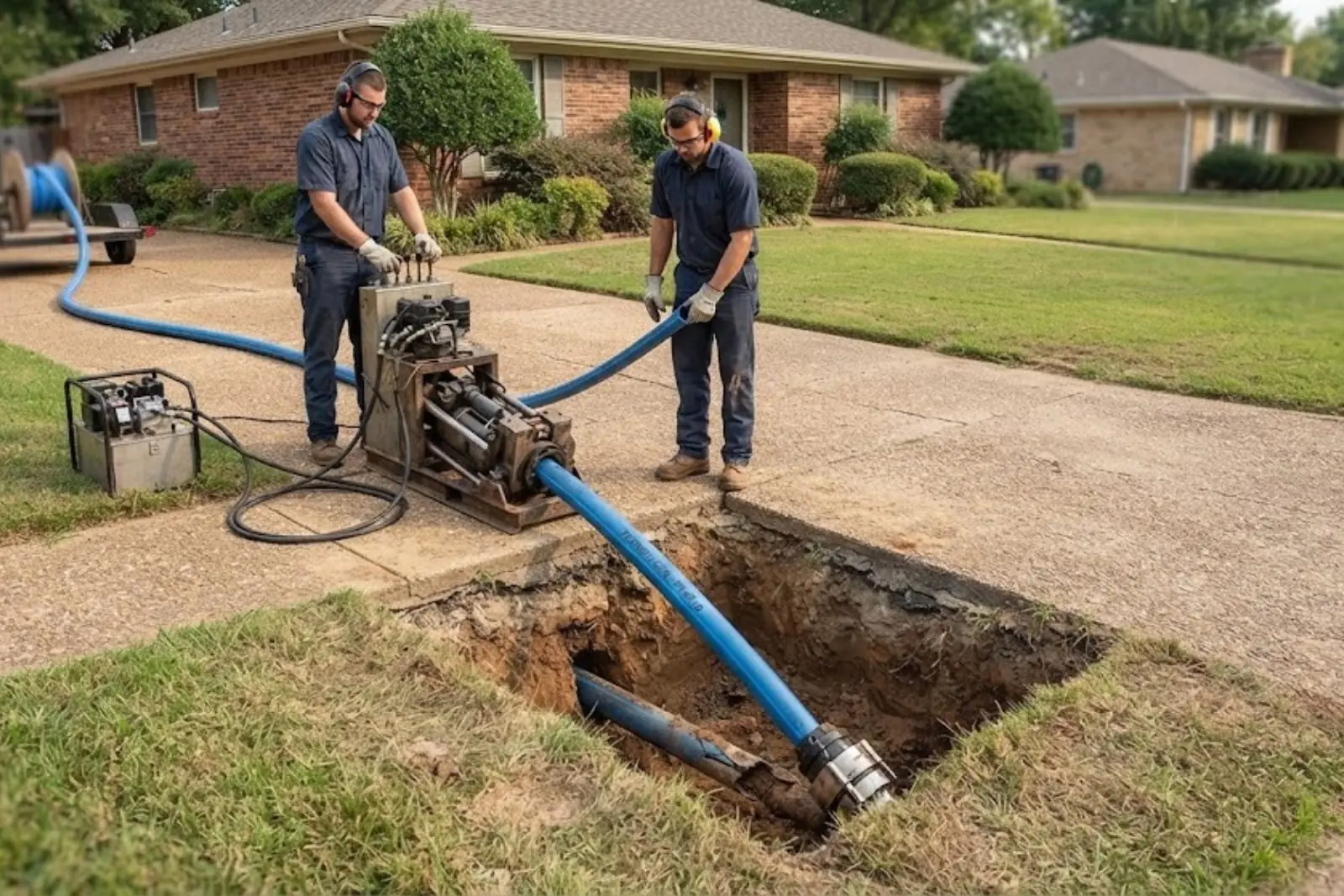
Epoxy lining, often called cured in place pipe, repairs a damaged sewer line from the inside. A soft liner soaked in resin is pulled or inflated into the old pipe and cured until it hardens into a pipe within a pipe. The old line stays in place, so the yard, driveway and landscaping stay mostly untouched.
People often ask what it costs. The honest answer is that it depends on the line, and we do not quote a figure without a camera inspection. This guide explains what moves the price so you can compare quotes fairly.
Our price is clear before work starts, and it is based on what the camera shows.
How lining works
Camera inspection
We record the line to find cracks, offsets, roots and the length to be lined.
Clean the line
Roots and scale are cut or jetted out so the liner can bond.
Insert the liner
A resin-soaked liner is pulled through the line from an access point.
Cure
The liner is inflated and hardened with heat, steam or light.
Final camera check
We record the finished pipe and open any lateral connections.
What sets the price
| Factor | Why it matters |
|---|---|
| Length of the section | More pipe means more liner and more labor. |
| Pipe diameter | Larger lines need larger liners. |
| Access points | Clean outs make the job easier, digging an access adds work. |
| Condition of the line | Heavy roots or scale need more cleaning first. |
| Number of laterals | Each branch must be reopened after the lining. |
| Permits and inspection | Ask the City of Santa Paula building department what applies. |
Because those factors vary so much, comparing a quote that does not mention a camera, the length and the access point is not a fair comparison.
When lining is not the answer
- The pipe has collapsed or is badly offset.
- A belly holds water and lining would lock in the low spot.
- The pipe is so deformed the liner cannot pass.
- The line needs a larger diameter than the old pipe.
In those cases, excavation and replacement are the fix. See sewer line repair for both methods and how we choose.
Lining versus digging
Lining avoids trenching, which saves landscaping, hardscape and time. Digging lets you replace the whole pipe with a new one and correct slope problems. The camera decides, because a lined pipe is only as good as the pipe it sits in.
Before any lining, a sewer inspection confirms the length, the damage and whether lining suits the pipe.
Questions to ask any contractor
- Will you camera the line before and after?
- What material and thickness is the liner?
- How will you reconnect lateral lines?
- What warranty applies, and what does it exclude?
Ask for the recordings and keep them with your property records.
Other trenchless options
Pipe bursting pulls a new pipe through the old one while breaking the old pipe apart. It can fix a pipe that lining cannot, such as one with a belly, but it needs entry and exit pits. The camera decides which method fits.
Spot repairs are also possible where only a short section is damaged. Dig a small hole, replace that section and restore the surface.
Warranty and documentation
Ask what the warranty covers and what voids it. Heavy root growth or later damage may be excluded. Keep the before and after video, the invoice and the warranty with your property records. They help if you sell the house.
Planning around the job
The line has to be dry and out of service during lining. Plan your water use, laundry and showers around the work. Tell us about gates, pets and anyone working from home. We explain the schedule before the work starts.
If a backup is happening now, call right away. Cleaning the line first is often the first step, see sewer line cleaning.
How to compare two quotes
Put the quotes side by side and check that both cover the same footage, the same access method and the same cleaning step. One may include a pre-lining camera, root removal and reopening of branch lines while another leaves those out. A lower number that omits the cleaning can cost more later.
Ask each contractor to show the camera footage that justifies the footage they quoted. A quote based on a guess is not a price.
What to expect on the day
Expect equipment in the yard or driveway, a short period with no water use in the house and a final video. The liner needs time to cure before the line returns to service, and we tell you when it is safe to run water again. Ask what to do if a drain backs up during the cure.
Sewer lines in Santa Paula
Santa Paula sits on the north bank of the Santa Clara River, and many lots in the older neighborhoods have lines that were laid decades ago. Ask your water utility and the City of Santa Paula which portion of the sewer line is yours and which belongs to the city, since that decides who pays for a repair.
Mature trees near a line are a common source of root intrusion. A camera shows whether the roots entered at a joint or crack. We serve sewer lines in Fillmore and Ventura as well.
Frequently asked questions
It depends on length, diameter, access and the condition of the pipe. We give a clear price after a camera inspection.
Rules vary. Ask the City of Santa Paula building department.
No. A collapsed or badly offset pipe needs replacement or excavation.
It seals joints and cracks where roots enter, but roots can still push at the ends and connections.
It depends on the location. Ask the City of Santa Paula where the property line responsibility ends.
Need a camera on your sewer line? Call our 24/7 line.
Call (805) 249-7135