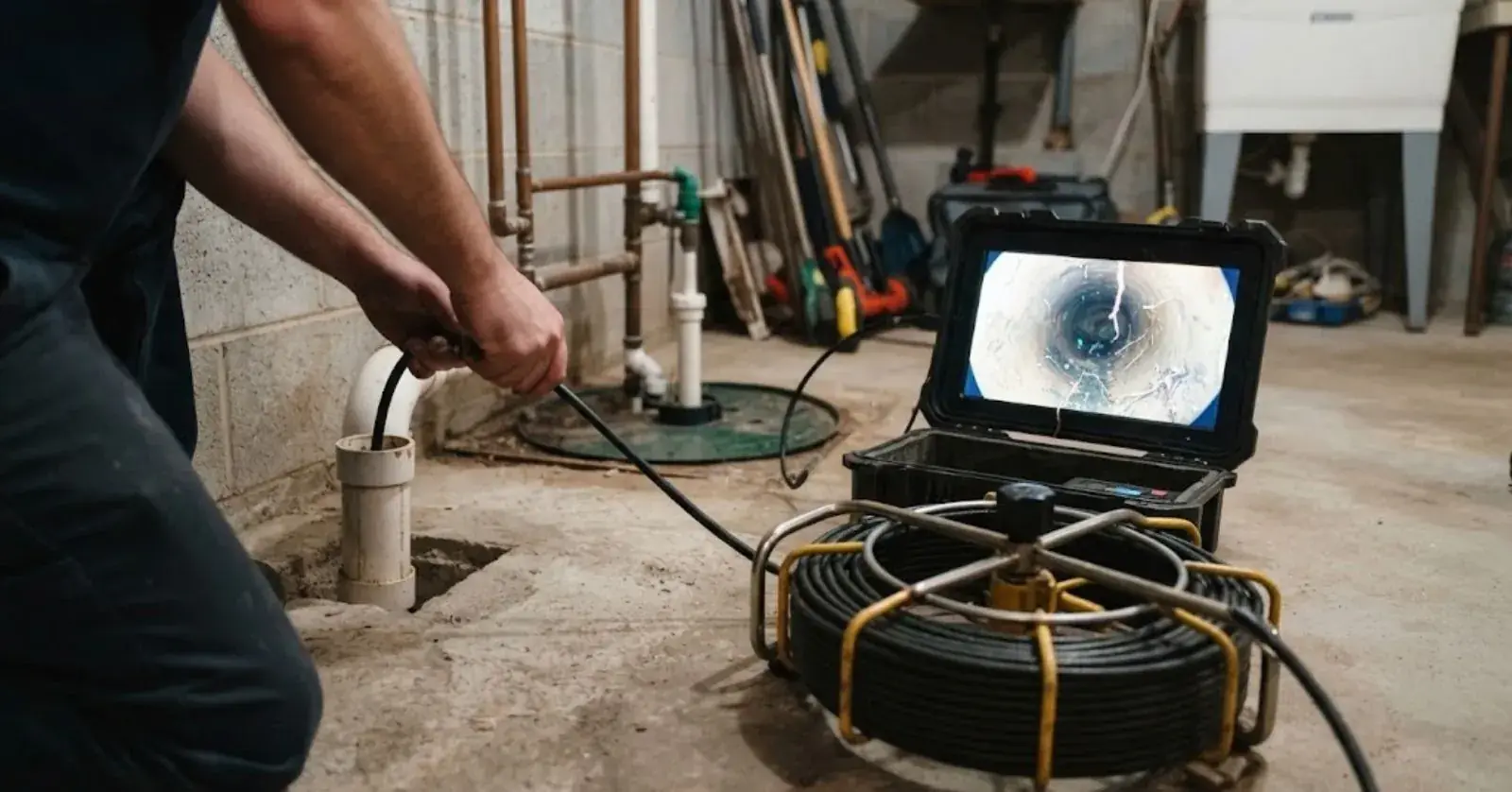
A sewer inspection sends a waterproof camera through your drain or sewer line and records what is inside. In Santa Paula, CA we use it for recurring clogs, pre-purchase checks, after a root cleaning and before a repair or lining job.
The picture answers questions that guesses cannot. Is the pipe cracked or just dirty? Are the roots at one joint or along the line? Is a low spot holding water? Is it clay, cast iron or plastic?
Because the pipe is buried, a camera is the only practical way to know. It also gives you a recording to compare later.
What the camera shows
| Finding | What it means | What happens next |
|---|---|---|
| Cracks or breaks | Pipe wall damage | Spot repair, lining or replacement. |
| Roots | Entry at a joint | Clean the line and consider lining. |
| Offset joints | Pipe sections out of line | Repair the joint. |
| Belly or sag | Low spot that holds water | Evaluate replacement of that section. |
| Grease and scale | Buildup on the wall | See hydro jetting. |
Before buying a home
A home inspection usually does not include the sewer line. A camera pass before closing can reveal roots, breaks or old Orangeburg pipe that is expensive to replace. It is useful in older neighborhoods around downtown Main Street where lines are older.
Ask the seller whether the line has been cleaned or repaired, and share the recording with your agent.
After repeat clogs
If a drain keeps clogging after cleaning, a camera finds the reason. See our drain cleaning page for the first steps, and sewer line repair for what we do when the pipe is damaged.
How the inspection works
Access
We find a cleanout, vent or fixture that opens the line.
Run the camera
A flexible rod pushes the camera and shows distance.
Record
We mark the locations of problems and save the video.
Explain
We walk through the footage and what it means.
Locating the pipe
Cameras with a locator transmitter let us find the pipe and mark its depth at the surface. That helps plan a repair that avoids driveways and landscaping where possible.
What an inspection cannot do
A camera shows the inside of the pipe. It cannot always tell if the pipe will fail next month. Where the footage is unclear, we say so instead of guessing.
Reading the camera findings
The video shows the inside of the pipe in real time. We point out the pipe material, the joints, offsets, root intrusion, cracks, sags where water pools and any buildup. A sag, often called a belly, collects waste and clogs again and again, which is why a line that has been cleared three times may need more than another cleaning.
We note the distance to each finding from the cleanout, so a repair, if needed, starts at the right spot instead of guessing along the line. Ask for a copy of the recording and keep it with your property records.
Cleaning and inspection often go together. If the camera finds grease or roots, see sewer line cleaning. If it finds a break, see sewer line repair.
What affects sewer inspection cost
You get a clear price before work starts. The factors are:
A cleanout is easy. Pulling a toilet adds time.
Longer lines take more time and more cable.
A heavily clogged line has to be cleared before the camera can pass.
A locator and depth marking adds to the visit.
Recording and explaining takes time, and we include a copy for your records.
Inspection is a diagnostic cost, not an insurance claim. If it supports a covered loss, keep the recording. Want your real number? Call (805) 249-7135.
Sewer Inspection questions from Santa Paula homeowners
Most are done in under an hour if the line is accessible.
Yes. We share the recording so you can show an agent, a seller or an insurer.
It is not required, but it is a smart step for homes with older lines.
Yes. It shows where the blockage is and what it is made of.
It shows cracks and breaks. Small leaks may need other tests.
Have a plumbing problem right now? Our line is answered 24/7.
Call (805) 249-7135