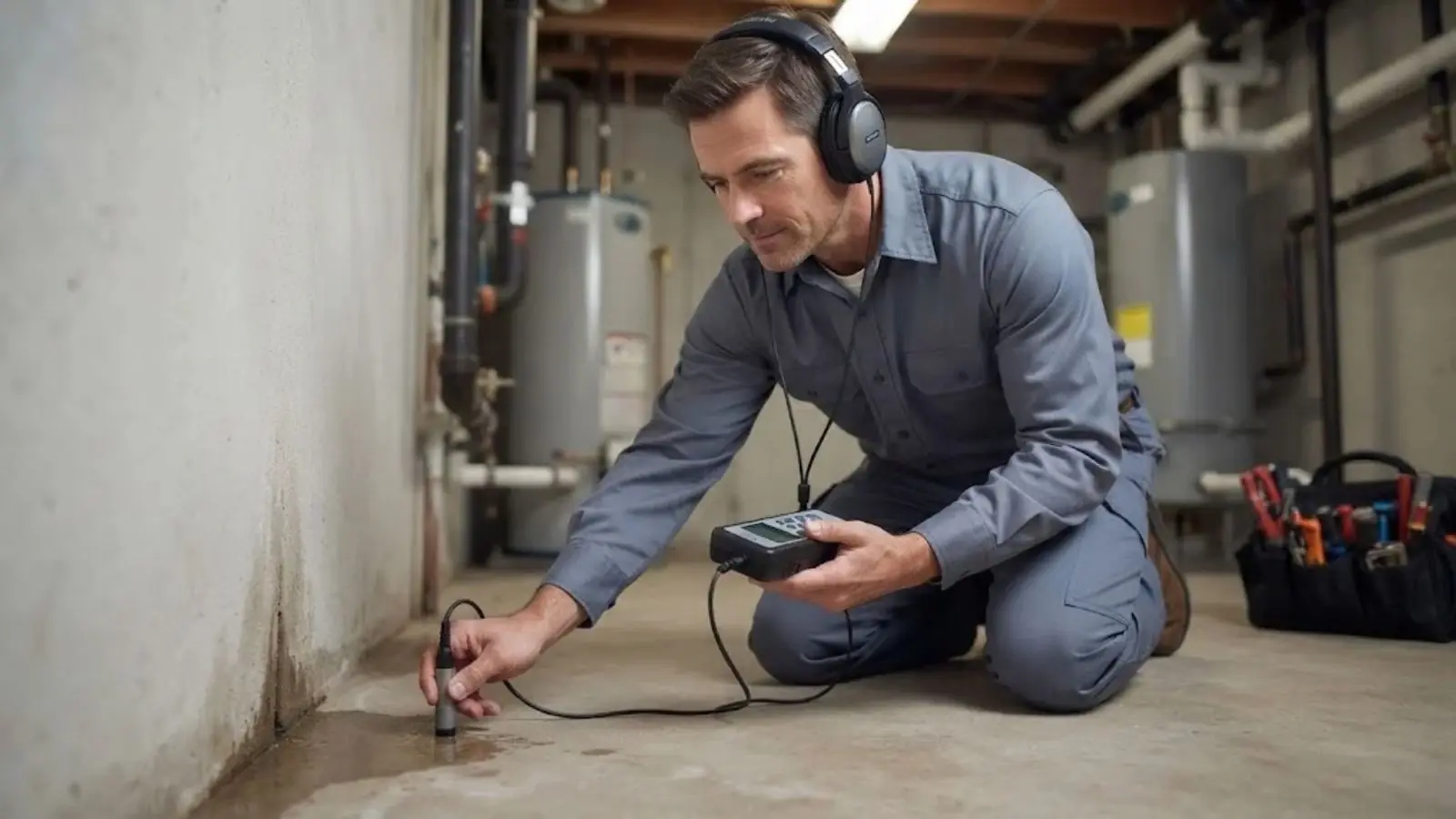
Leak detection is the process of locating a hidden water leak before opening a wall, floor or yard. In Santa Paula, CA we use pressure testing, acoustic listening and thermal imaging so the repair starts at the right spot instead of a guess.
Callers rarely say they have a leak. They say the water bill doubled, the meter is moving when no one is home, the floor is warm in one spot, or a ceiling stain keeps growing. Those symptoms are how we begin, and we work from them to the cause.
Santa Paula's older homes near downtown were built decades ago, and some supply lines may have been replaced while others have not. Newer homes toward Harvest at Limoneira have newer plumbing, but a leak can still start at a fitting or connection. A leak check finds out which applies to your house.
When a hidden leak is an emergency
Water in a ceiling, water running under a floor, or a meter that spins with every fixture off can all become expensive quickly. We answer 24/7, including nights and weekends, and offer same-day appointments when available. If water is coming through light fixtures, shut off the power to that circuit first.
Tell the dispatcher where you see the damage and where the main shutoff is. Knowing that lets us plan how to isolate the leak.
Before the leak specialist arrives
- Find the main water shutoff and turn it clockwise if the leak is active.
- Turn off every fixture and appliance that uses water, then read the meter and note the number.
- Take photos of stains, wet areas and the meter reading.
- Do not cut into drywall or tile yourself. A hole in the wrong place does not find the leak.
Meter still running with everything off
Turn off every faucet and appliance and look at the meter's leak indicator, a small triangle or dial that spins when any water moves. If it keeps turning, water is leaving the system somewhere. We separate the problem into three zones. The line from the meter to the house, the pipes inside the house, and irrigation or outdoor fixtures.
A meter that moves with the house valve closed points to the buried line. A meter that stops with the house valve closed points to plumbing inside the house. That one test often saves hours.
| What you notice | Likely zone | First test |
|---|---|---|
| Meter spins, house valve closed | Service line from meter to house | Isolate and pressure test the line. |
| Meter spins only with house valve open | Inside plumbing or irrigation | Zone isolation and acoustic listening. |
| Warm spot on the floor | Hot water line under a slab | Thermal imaging and listening. |
| Stain on a ceiling or wall | Supply or drain line above | Moisture meter and thermal camera. |
| Wet yard, no rain | Service line or irrigation | Pressure test and tracing. |
High water bills with no visible water
A bill that crept up over months is often a toilet leak, a slow irrigation leak or a failing line under the slab. We start with the cheap checks. A dye test on the toilet flapper takes minutes. If those clear, we move on to the lines.
Ask your water utility how its bill compares with your meter reading so you know if the utility's number matches your own. See water line repair if the leak turns out to be between the meter and the house.
Ceiling, wall and crawlspace leaks
A stain on a ceiling is often from a bathroom above, but it can also be a roof or HVAC condensation problem. Moisture meters and a thermal camera tell us whether the water is moving. Under-house and crawlspace leaks are quieter and often found by sound or by checking supply valves one at a time.
Slab and underground leaks
A leak under a concrete floor or in a buried line needs listening equipment. Water escaping a pressurized pipe makes a distinctive sound that travels along the pipe. We map it with sensors and mark the spot before we break anything. See slab leak repair for the fix, including rerouting a line instead of jackhammering.
Irrigation and pool lines
Irrigation lines and pool plumbing leak at buried fittings. We pressure test each zone to find the failing one. If you suspect a pool or spa leak, tell the dispatcher so we can bring the right gear.
What affects leak detection cost
You get a clear price before work starts. The factors are:
A single fixture check is quicker than a whole-house search.
Pressure testing, listening, thermal imaging and camera work take different time and equipment.
Finished floors, tile and landscaping affect how we reach the line.
Finding the leak is one price. Repair of the pipe is quoted separately.
Night and weekend dispatch is scheduled differently, and we say so up front.
Many policies cover sudden water damage but not the cost of finding the leak, and some cover a portion when the leak led to damage. Ask your carrier before work starts. Want your real number? Call (805) 249-7135.
Leak Detection questions from Santa Paula homeowners
Yes. The line is answered 24/7. Active water in a ceiling, wall or floor, or a meter spinning with everything off, is treated as urgent, and we offer same-day appointments when available.
Turn everything off and watch your meter's leak indicator. If it moves, you likely have one. Take a photo of the meter and share it with the dispatcher.
Often only a small access hole. We locate the leak first so the opening is as small and as accurate as possible.
Yes. We use acoustic listening and thermal imaging to find leaks under a slab before breaking any concrete.
Simple checks can take an hour. A hidden leak in a large house can take longer.
Some policies cover detection when it leads to a covered water damage claim. Check with your carrier.
Have a plumbing problem right now? Our line is answered 24/7.
Call (805) 249-7135