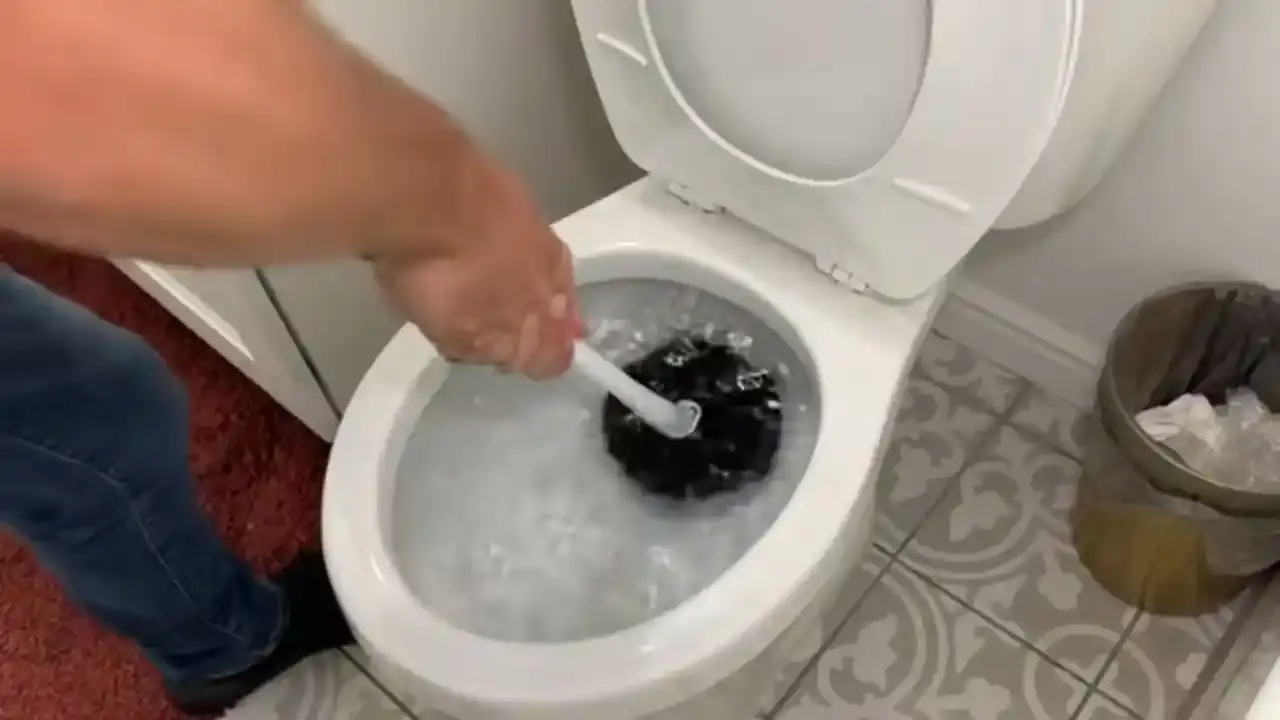
Baking soda and vinegar fizz impressively, so it is natural to hope the reaction will push a clog down the drain. In practice the fizz is gentle, mostly stays in the bowl and does not push anything. A clog caused by too much paper or a foreign object needs force or a tool, not foam.
That does not mean you are out of options. A flange plunger, hot tap water and dish soap clear most single-toilet clogs. This guide covers what to try in order, what to avoid and the signs that the problem is in the line behind the toilet.
If the toilet is about to overflow, close the valve behind it and stop flushing before you read further.
What baking soda and vinegar can and cannot do
Mixed together, the two make carbon dioxide, water and a mild salt. That can loosen a light film of organic residue in a slow drain. It will not move a wad of paper, a toy or a wipe, and a toilet trap is not a place for slow chemistry.
If you want to try it, use a cup of baking soda, then two cups of vinegar, wait twenty minutes and follow with hot tap water. Treat it as a cleaning step, not a repair, and move to a plunger if nothing changes.
Try these steps in this order
Stop and assess
Close the supply valve if the bowl is near the rim. Do not flush again.
Use a flange plunger
A flange plunger has an extra rubber collar that seals the toilet drain. Push gently first to clear air, then pump firmly with a good seal.
Add hot water and dish soap
Pour a squirt of dish soap into the bowl, add hot tap water from waist height and wait. Do not use boiling water, which can crack porcelain.
Use a toilet auger
A closet auger reaches past the trap and can break up or hook a clog. Turn it gently to protect the porcelain.
Stop if nothing works
Repeated plunging is a sign the clog is past the toilet. Call for help.
What to avoid
- Chemical drain cleaners, which can damage pipes and are dangerous to splash on skin.
- Mixing cleaning products, since some combinations release harmful gas.
- Boiling water, because it can crack a cold toilet bowl.
- Flushing wipes labeled flushable, which do not break down like paper.
If a chemical cleaner has already gone into the bowl, tell your plumber. It is a safety issue for anyone working on the toilet.
Signs the clog is not just the toilet
If a second toilet gurgles, the tub drains slowly, or water rises in the shower when you flush, the blockage is in the branch or the main line. A plunger will not help there. A cable or a hydro jet will. See drain cleaning and sewer line cleaning.
A toilet that clogs every week with no obvious cause may have a partial blockage, a damaged flange or a line with a low spot. A camera looks inside the pipe, see sewer inspection.
Keeping the toilet clear
Flush only toilet paper and human waste. Keep a flange plunger in the bathroom. If you have older low-flow toilets that struggle, cut back on paper per flush. Teach everyone in the house where the wall valve is.
Why toilets clog in the first place
Most clogs come from too much paper at once, a wipe or a small object. Low-flow toilets use less water per flush, so they have less force to move a large load. Children's toys, cotton swabs and hair can also lodge in the trap.
A toilet that clogs only now and then is usually a paper or habit problem. One that clogs every few days points to a partial blockage, a vent problem that slows the flush or a pipe with a low spot where waste collects.
How a plunger actually works
A plunger works by moving water back and forth, not by suction alone. The first push sends water into the trap and the pull draws it back. Several firm strokes with the seal intact loosen most clogs. Keep enough water in the bowl to cover the rubber cup, and add some if it is low.
A flat sink plunger does not seal on a toilet drain. A flange plunger fits the curve and is cheap, so keep one in every bathroom.
Preventing the next clog
- Flush only toilet paper and human waste.
- Use less paper per flush, and flush twice for a large load.
- Keep wipes, floss and cotton products out of the toilet.
- Keep a plunger where everyone can find it.
- Teach children not to drop toys in the bowl.
If you rent, tell your landlord about a toilet that clogs again and again. It may be a line problem the owner should handle.
Clogged toilets and Santa Paula homes
Many homes near the Main Street historic downtown are older, and older homes often have older drain lines that run through the lot to the street. If your toilet clogs repeatedly, ask your water utility or the City of Santa Paula who maintains the section of sewer past your property line.
In a rental or a shop, tell your landlord or manager early. Commercial toilets clog at busy times and our commercial plumbing team can be called after hours. The same line covers Fillmore and Ojai.
Frequently asked questions
Rarely. It can clean a light film, but it does not move paper wads or objects. A flange plunger works better.
We do not recommend it. Chemical cleaners can damage pipes and are a splash hazard. Tell your plumber if you used one.
A partial blockage, a damaged flange or a low spot in the line can be the cause. A camera can show which.
That means the main line or branch is blocked. Stop using water and call.
It depends on where the problem sits. Ask the City of Santa Paula which part belongs to the city and which belongs to you.
Plunger did not work? Call our 24/7 line before the water reaches the floor.
Call (805) 249-7135