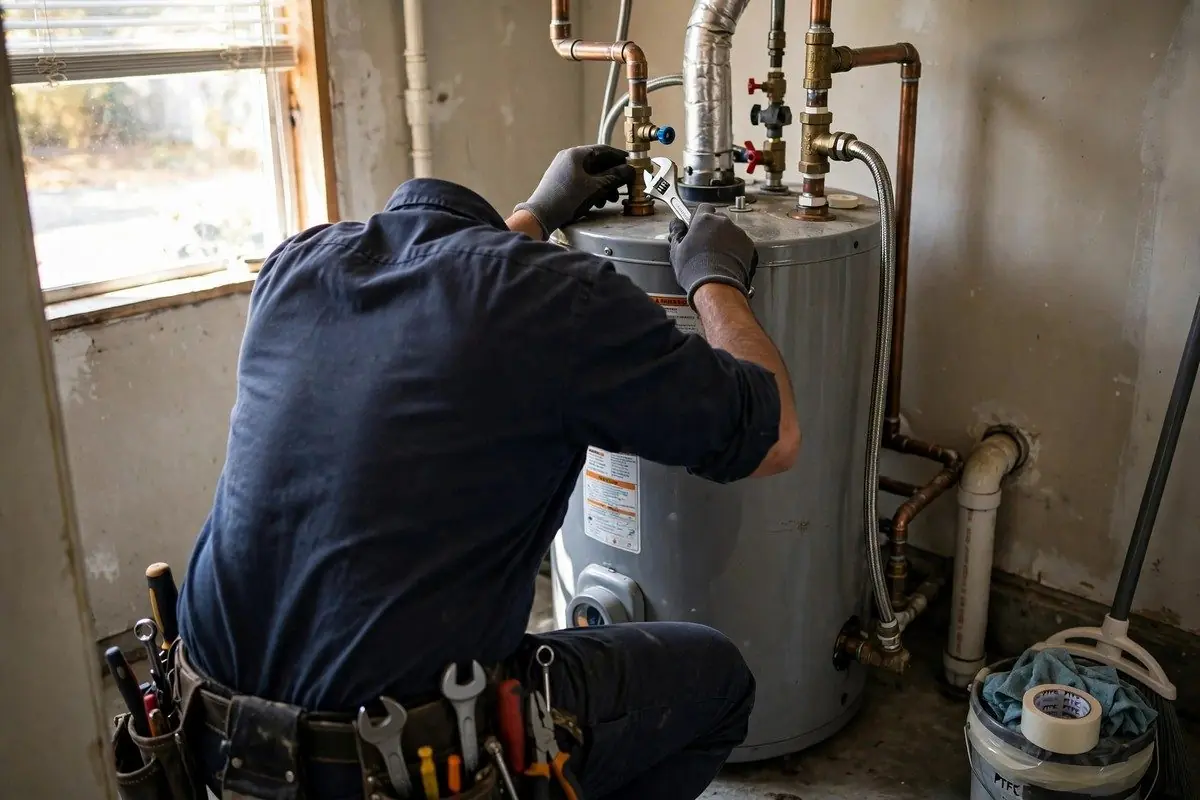
Gas water heaters with a standing pilot use a small safety device called a thermocouple. It sits in the pilot flame and generates a tiny electrical signal that keeps the gas valve open. If the flame goes out or the tip wears, the signal stops, the valve closes and the burner shuts down.
That is the right behavior, because a gas valve left open with no flame is dangerous. It also means a worn thermocouple can look like a dead heater. The pilot lights while you hold the button, then goes out as soon as you let go.
Gas appliances can be hazardous. If you smell gas at any point, leave the house, do not use switches or phones inside and call the gas company from outside.
How the thermocouple works
A thermocouple is a short copper rod with a tip that sits in the pilot flame. Heat makes a small voltage. The gas valve holds the pilot gas open as long as it receives that voltage. A tip that is dirty, bent or corroded makes too little voltage, and the valve lets go.
Newer heaters may use an electronic igniter and flame sensor instead of a standing pilot. They fail in similar ways, but the parts and steps are different, so check your manual and the label on the heater.
| What you see | Likely cause | What to do |
|---|---|---|
| Pilot lights, goes out when you release the button | Worn thermocouple | Replace the part. |
| Pilot will not light at all | No gas, clogged pilot orifice or a closed valve | Check the gas supply, call if unsure. |
| Pilot lights and stays, but no hot water | Thermostat or gas valve | Call a plumber. |
| Yellow, lazy pilot flame | Dirt or poor air supply | Call a plumber. |
| Smell of gas | Leak | Leave and call the gas company. |
What you can check safely
Quick checks before you call
- Confirm the gas valve to the heater is open.
- Check that the thermostat is set to a heat setting.
- Look at the pilot flame once lit, a steady blue flame is normal.
- Note the heater model and age from the label.
If the pilot lights and stays on, but you have no hot water, the issue may be elsewhere. See water heater repair.
Replacing a thermocouple
Replacement is a short job for a plumber who works with gas. The part is inexpensive, but it must match the heater and the gas valve, and the connections must be tight and leak tested. A poor fit leaves a leak at the valve.
After replacement, a plumber relights the pilot, checks the flame, tests for gas leaks at the connections and checks the venting. Ask for this to be done on every gas appliance visit.
Is the heater worth repairing?
A thermocouple is cheap compared with a new heater, but a tank that is 10 to 12 years old may be near the end of its life. If the tank also leaks or rumbles, replacement may make more sense, see water heater replacement.
If you want to remove standing pilot issues altogether, newer heaters light electronically and are covered on water heater installation.
Safety with gas appliances
Never bypass a safety device, never hold a pilot valve open with tape or a tool and never ignore a gas smell. Keep flammable items away from the heater. Gas work is a job for a licensed professional.
Standing pilot or electronic ignition
A standing pilot burns all the time, which uses a small amount of gas. An electronic igniter sparks only when hot water is called for, and a flame sensor confirms the flame. If the igniter or sensor fails, the heater shuts off. The symptom looks similar, but the fix is a different part.
Look at the label on the tank or the gas control. If you see a button and a small window, you have a standing pilot. If you see a display or blinking light codes, you have electronic ignition.
Signs the heater is aging
When replacement may be smarter
- The tank is approaching ten years old or more.
- Rust colored water or water at the base of the tank.
- A rumbling noise from sediment.
- Repeated repairs in the past year.
- Soot or scorching around the burner or vent.
What a service visit includes
A good visit does more than replace one part. The plumber checks the gas connections for leaks, the flue for proper draft, the burner flame, the relief valve and the temperature setting. Ask for these checks when you call, and for a short written note of what was found.
Questions to ask the plumber
- Is this a standing pilot or electronic ignition heater?
- Did you test for gas leaks and check the draft after the repair?
- Is the tank old enough that I should plan for replacement?
- Is the relief valve and its discharge pipe in good shape?
The best repair is the one that comes with a short written note, so you remember what was done and when.
Gas heaters in Santa Paula homes
Many Santa Paula heaters sit in garages and utility closets where dust, spider webs and sometimes drafts reach the pilot. A cleaned pilot assembly can help, though a failing part should still be replaced.
Ask your gas utility who to call for a suspected gas leak, and write the number somewhere you can find it. We help homes in Fillmore and Ventura too.
Frequently asked questions
The thermocouple is not making enough signal to hold the gas valve open. It is often worn or dirty.
Some people clean the tip, but a worn one needs replacement. Gas work is best left to a plumber.
Leave the house and call the gas company from outside. Do not use switches or phones inside.
Many newer heaters use an electronic igniter and flame sensor. Check the label and manual.
Garage heaters collect dust and can have drafts. Keep the area clear and have the venting checked when the pilot is serviced.
No hot water and a pilot that will not stay lit? Call our 24/7 line.
Call (805) 249-7135